Switzerland has one of the most visually striking heraldic traditions in Europe — bold, simple designs featuring bears, eagles, crosses, and geometric shapes that reflect the confederal spirit of a nation built on alliance rather than monarchy. Swiss heraldry is as much about civic identity as noble lineage, making it uniquely accessible to anyone with Swiss roots.
The Swiss Confederation and Heraldry
Switzerland’s political structure — a confederation of independent cantons rather than a centralized monarchy — shaped its heraldic tradition profoundly. Unlike France or England, where the royal court granted and regulated coats of arms, Swiss heraldry developed more organically through cantonal (regional) identity and family tradition.
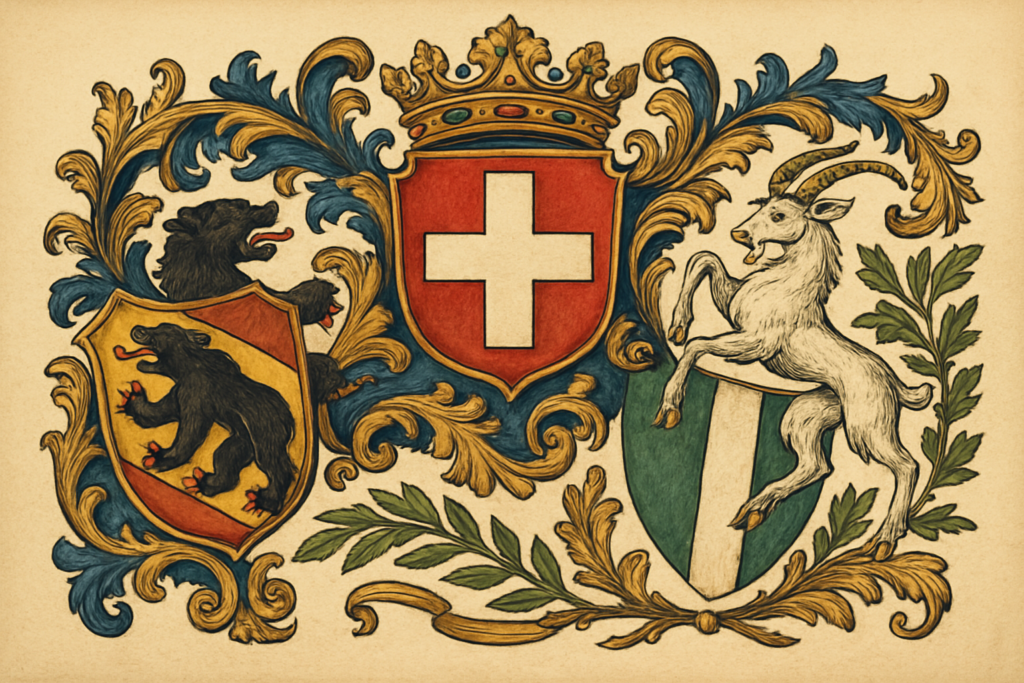
The Swiss Confederation itself adopted the famous white cross on red — inspired by the Crusading tradition and canton arms — which became the Swiss federal arms and, eventually, the Swiss flag. This cross now ranks among the most recognized national symbols in the world.
Cantonal Heraldry
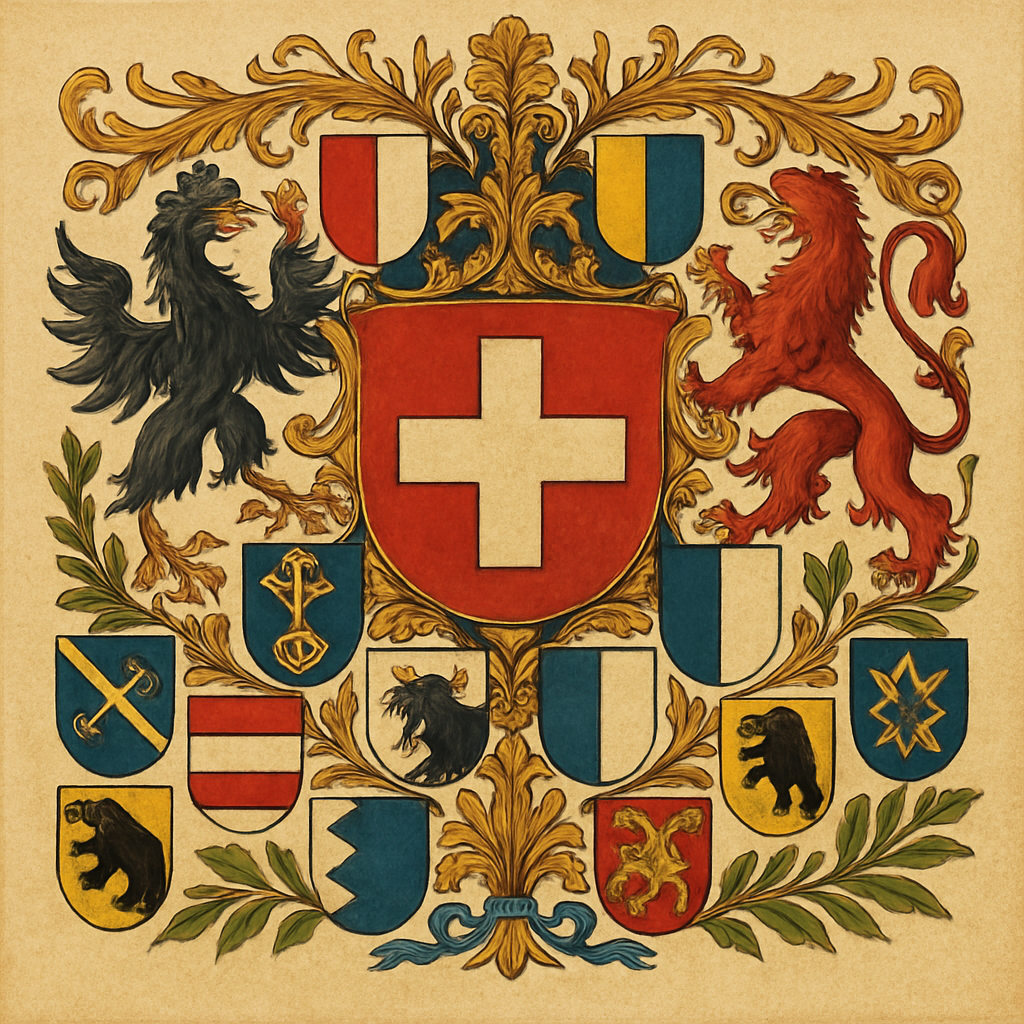
Each of Switzerland’s 26 cantons has its own coat of arms, many dating to the medieval period. These cantonal arms are bold, simple, and memorable:
- Bern: A black bear on yellow — the bear has been Bern’s symbol since the city’s founding legend in 1191
- Zurich: Blue and white stripes — one of the most ancient cantonal arms
- Uri: A black bull’s head — reflecting the cattle culture of the Alpine mountain canton
- Geneva: A golden key and eagle — referencing ecclesiastical power and the Holy Roman Empire
- Ticino: Red and blue stripes with a cross — reflecting Italian and Swiss influences
Family coats of arms often incorporated cantonal symbols, especially the cross, eagle, or bear, making them a regional statement of belonging.
Swiss Family Heraldry
Swiss family heraldry — known as Bürgerrecht heraldry — was closely tied to civic citizenship rather than aristocratic title. A family’s coat of arms was associated with their Heimatort (place of origin), the community to which they belonged legally.
This system means that Swiss heraldic records are often linked to civic archives in specific towns and cantons, rather than a central national register. The Swiss Heraldic Society (Schweizerische Heraldische Gesellschaft) and the Swiss Federal Archives maintain extensive records.
Common Symbols in Swiss Heraldry
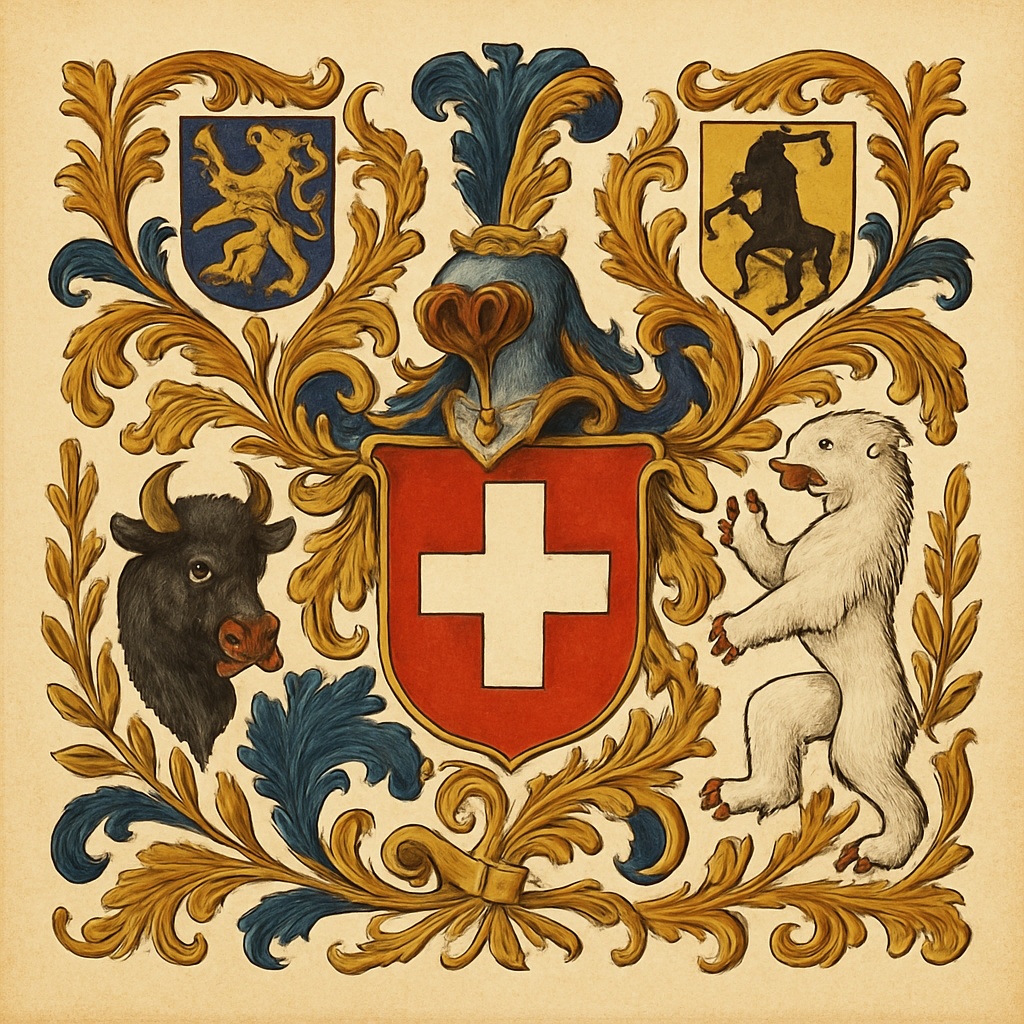
- Bear: Strength and endurance — the signature Swiss animal
- Eagle: Authority and independence
- Cross: Christian faith and the Swiss national identity
- Mountains and peaks: Reflecting the Alpine landscape
- Ibex and chamois: Mountain animals unique to Swiss heraldry
Swiss Diaspora Heraldry
Switzerland’s reputation for quality, precision, and banking attracted Swiss emigrants across the centuries — to the United States (particularly Pennsylvania and Ohio), South America, and Africa. Many Swiss family names carried to these destinations have associated coats of arms in Swiss archives.
Honor Your Swiss Heritage
Once you’ve traced your Swiss roots, your personalized Family Legacy Report gathers everything into one elegant digital document:
- Your family coat of arms — the precision and elegance of Swiss tradition, recreated in your report
- Your surname’s origin and cantonal history — tracing your family back to its Heimatort
- The meaning of each symbol and colour — delivered instantly as a PDF to your email, with nothing to ship
From the Alps to the Rhine, your Swiss family name connects you to a tradition of independence, craftsmanship, and civic pride that has defined one of the world’s most admired nations.