A coat of arms was not a piece of art. Not originally. It was a tool — as practical and necessary as a sword or a shield. Understanding how coats of arms were actually used in medieval times reveals why they became so deeply embedded in family identity, and why they still carry meaning today.
On the Battlefield: Identification Under Armor
The story starts on the battlefield. By the 12th century, European knights wore full suits of plate and mail armor. Helmets covered their faces completely. In the chaos of battle, there was no way to tell friend from enemy.
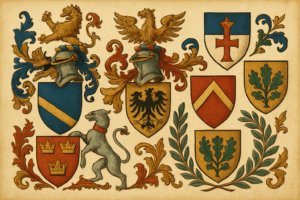
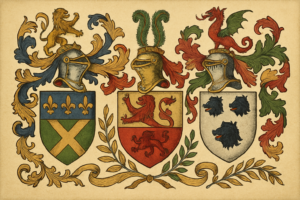
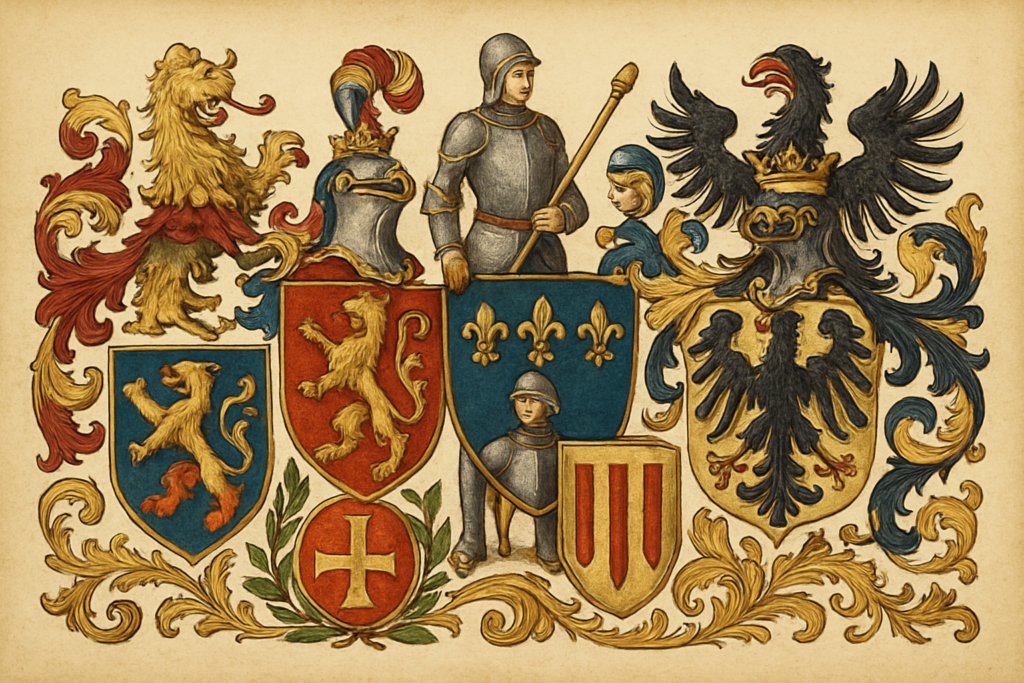
The solution was heraldry. Knights began painting bold, unique designs on their shields and wearing distinctive surcoats (cloth garments worn over armor) bearing the same design. From a distance, you could instantly identify who was fighting for whom.
This is where the term “coat of arms” comes from — the design on the coat (surcoat) worn over the arms (armor).

In Tournaments: Entertainment and Display
As medieval society became more stable, the battlefield gave way to the tournament field. Jousting, melee combat, and archery contests were the great spectator sports of the Middle Ages.
Tournaments were also heraldic showcases. A knight’s coat of arms was displayed on his shield, his horse’s caparison (decorative covering), his banner, and the tent where he camped. Heralds — the officials who managed tournaments — would announce each competitor by describing their arms to the crowd.
This is how heraldry evolved from a military tool to a symbol of family prestige and identity.
In Law and Administration: The Original Signature
Before widespread literacy, most people could not sign their name. But they could use a seal. A coat of arms pressed into hot wax became a legally binding signature.
Land grants, legal contracts, treaties between kingdoms, church donations, and wills were all authenticated with heraldic seals. The unique design ensured that no one could forge the document without access to the original seal ring.
This is why signet rings — rings engraved with a coat of arms for pressing into wax — were among the most important possessions a medieval nobleman could own. They were literally instruments of legal power.
In the Church: Stained Glass and Memorial Stones
Medieval churches are full of heraldry. Families who donated to the construction of a church, funded a chapel, or paid for stained glass windows would have their coat of arms displayed prominently.
Memorial brasses and tomb effigies almost always show the deceased’s coat of arms. Walk through any old English or Irish church and you will find family arms carved into the walls and floors — a permanent record of who funded and who worshipped there.
In Daily Life: Marking Ownership
Beyond war and law, coats of arms appeared everywhere in a noble household:
- Painted on the gates and walls of castles
- Embroidered on tapestries and bed hangings
- Carved into furniture and fireplace mantels
- Stamped into leather book covers
- Painted on household pottery and silverware
- Sewn into the livery (uniforms) of servants
Your coat of arms marked everything you owned and everywhere you lived. It was your brand, your identity, your claim to place in the world.
The Heralds: Keepers of the System
As heraldry grew more complex, a professional class emerged to manage it: heralds. They kept records of all registered coats of arms in documents called armorials or rolls of arms. They adjudicated disputes when two families claimed the same design. They accompanied armies and tournaments, announcing combatants and recording deeds.
In England, this system formalized into the College of Arms (founded 1484), which still exists today. In Scotland, the Court of the Lord Lyon still legally regulates coats of arms. These institutions are the direct successors of the medieval herald tradition.
Why It Still Matters
The medieval world is gone. But the coats of arms it produced are not. Every coat of arms that survives in the archives represents a real family — real people who lived, fought, loved, and built something.
When you display your family’s coat of arms today, you are participating in a tradition nearly a thousand years old. That is not nothing.
Or discover the full story of your surname with our Heritage Origins search.