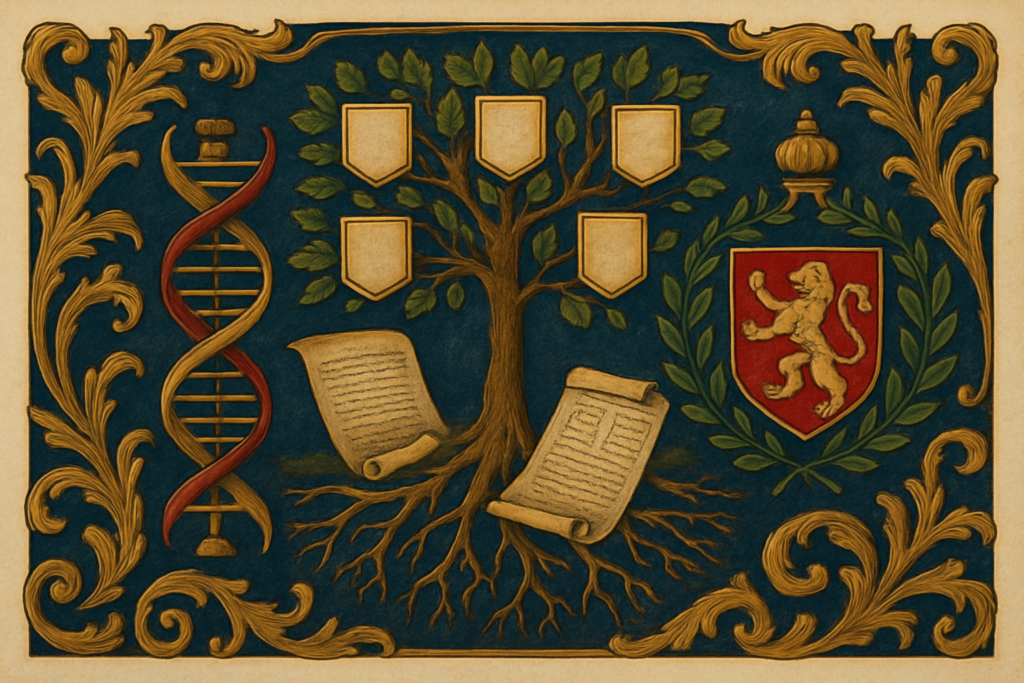
Two of the most powerful tools for understanding where you come from could not be more different. One is cutting-edge science: a DNA test that reads your genetic code and compares it against millions of others worldwide. The other is nearly a thousand years old: a coat of arms, carved into stone, pressed into wax, and passed down through generations.
Together, they tell a story that neither can tell alone.
What DNA Tests Tell You
Modern DNA ancestry tests analyze hundreds of thousands of genetic markers and compare them against reference populations to estimate your ethnic origins. The major platforms — AncestryDNA, 23andMe, MyHeritage DNA — can tell you roughly:
- What percentage of your DNA comes from different regions (e.g., 43% Irish, 28% English, 19% Scottish, 10% Germanic)
- Which living people in their database are likely relatives (DNA matches)
- Specific regional communities your ancestors may have come from
- Certain health-related genetic traits (on some platforms)
DNA is powerful because it bypasses paper records entirely. Even if your family’s documents were lost in a fire, a war, or the chaos of immigration, your genes still carry the signature of where your ancestors came from.
What DNA Tests Cannot Tell You
DNA has significant limitations for genealogy:
- No names: DNA tells you regions and percentages, not surnames, places, or stories.
- No family lines: Knowing you are 43% Irish does not tell you which specific Irish county, which family, or which branch of your family contributed that DNA.
- Accuracy decreases with distance: DNA estimates are reasonably accurate for broad regions but less precise for specific countries or sub-regions.
- No heraldic connection: A DNA test cannot tell you what coat of arms your family carried, what motto they lived by, or what symbols they used to identify themselves for centuries.
What Heraldry Tells You
Heraldry works completely differently. A coat of arms is tied to a surname and a documented family line. It tells you:
- What your family’s name meant in heraldic terms — the symbols, colors, and figures they were associated with
- What values and qualities those symbols were meant to represent
- The geographic origin of your family name
- How your family name appears in historical archives, rolls of arms, and heraldic registries
Where DNA gives you percentages and regions, heraldry gives you identity and story.
How They Work Together
The most complete picture of your family comes from combining both approaches:
- Start with DNA: Confirm your ethnic origins and find DNA matches who may be distant relatives.
- Use DNA matches to identify surnames: Your matches’ family trees often reveal the surnames of your shared ancestors.
- Research those surnames heraldically: Once you have surnames, you can look up the coats of arms associated with each family line.
- Cross-reference with paper records: Census records, immigration files, and church registers connect the DNA and heraldic data to real places and dates.
The result: you know not just where you came from statistically, but the specific families, the specific names, and the specific symbols they used to represent themselves across centuries.
A Real Example
Imagine a DNA test reveals you are 38% Irish. DNA matches point to surnames like O’Brien, Murphy, and Connolly. Paper research places your great-great-grandmother as a Murphy from County Cork.
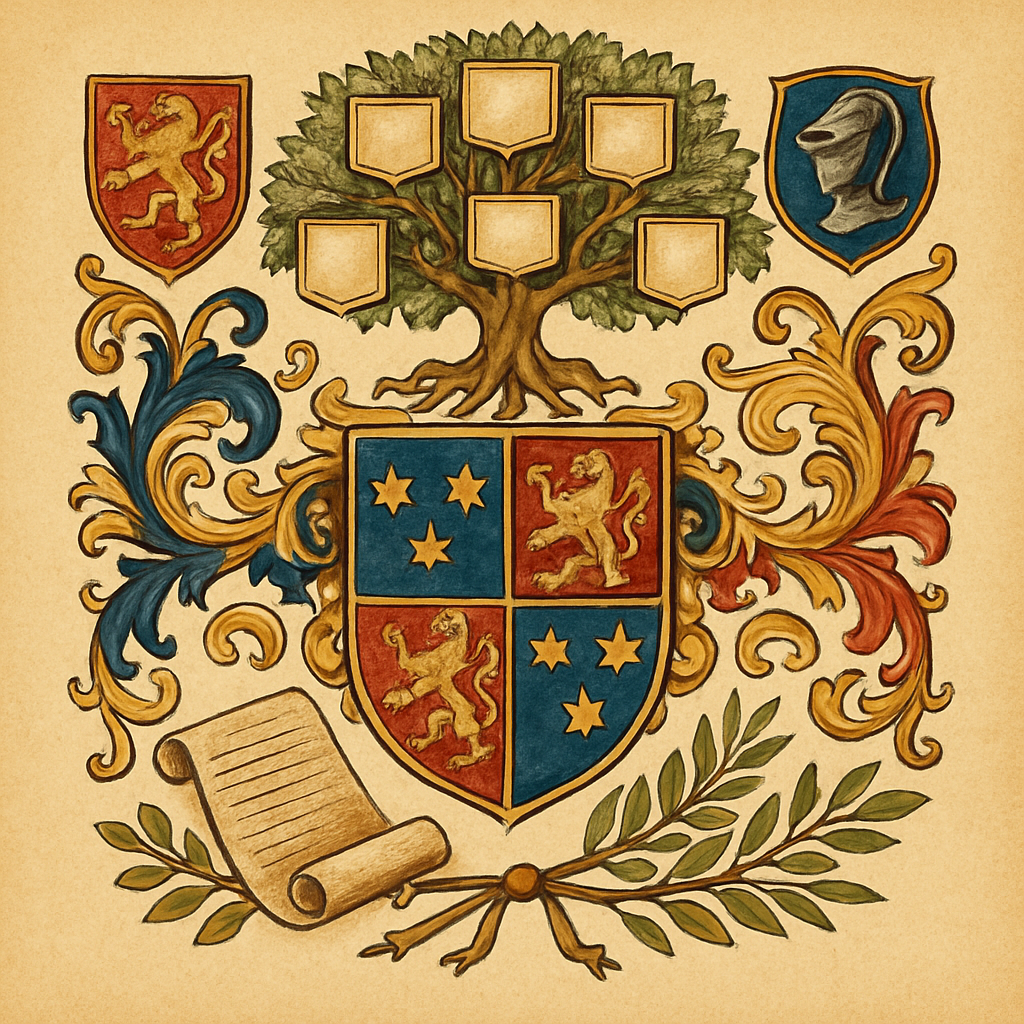
Now heraldry picks up the story: the Murphy coat of arms features a lion on a quartered shield, dating to the O’Murchadha sept of Munster, a family of warriors whose name means “sea warrior.” The specific Cork branch of the Murphy family has recorded arms going back centuries.
Suddenly, you have moved from “38% Irish” to a specific family, a specific place, a specific story.
Discover Your Full Story
At Lineage & Heritage Studio, we bridge the gap between DNA results and heraldic identity. Search your surname to see the coat of arms and surname history associated with your family name.
For our most complete family history reports, including surname research, notable ancestors, and heraldic identity: