Long before digital signatures, email, or even paper, there was the signet ring — a small, engraved ring pressed into hot wax to seal letters, authenticate documents, and prove identity. It was the original signature.
Ancient Origins: Egypt, Mesopotamia & Rome
The earliest known signet rings date to ancient Egypt, around 3,500 years ago. Pharaohs wore scarab-shaped rings engraved with their names in hieroglyphics.
In Mesopotamia, cylinder seals served the same purpose. The Romans adopted signet rings enthusiastically — initially only patricians were allowed gold rings, but eventually all free citizens could wear them.
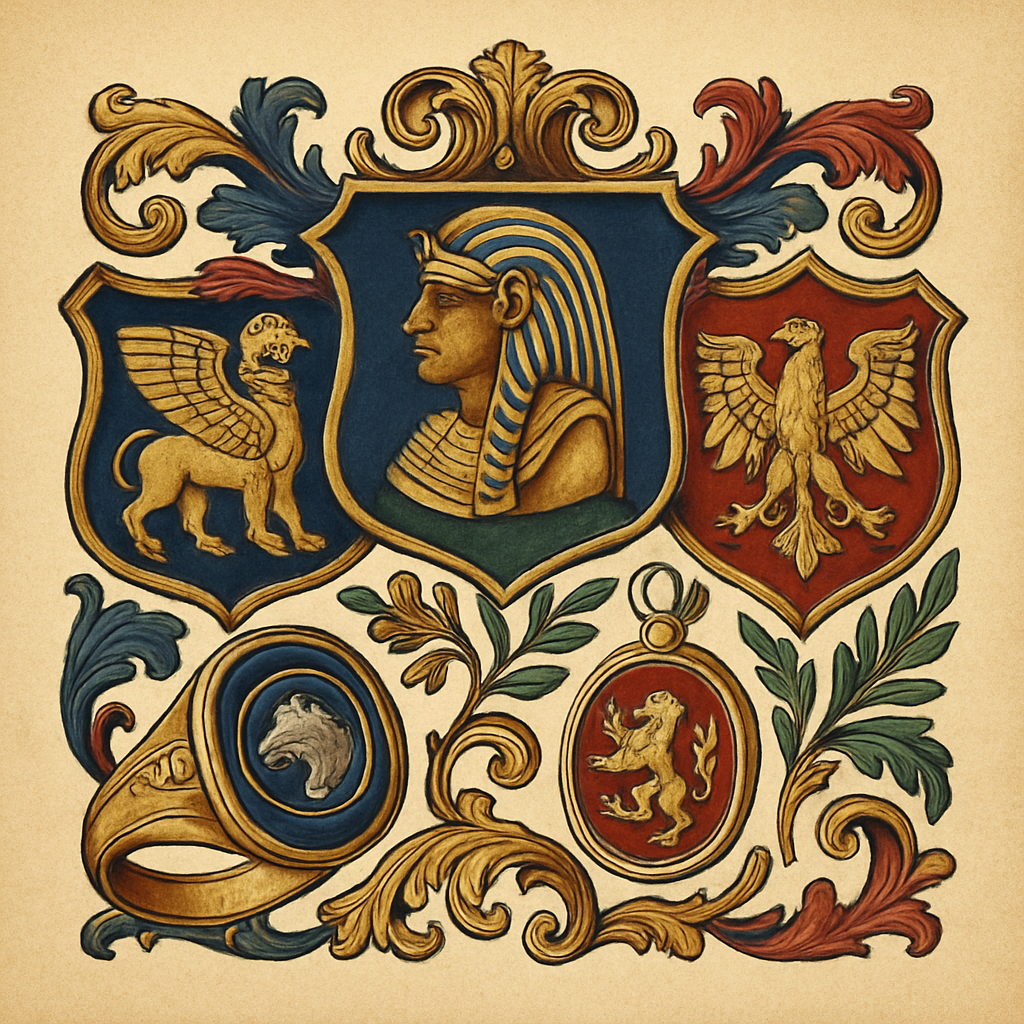
Medieval Knights and Heraldic Signets
When heraldry emerged in the 12th century, signet rings became the natural carrier for coats of arms:
- Sealing correspondence: Hot wax sealed a letter, and the signet’s impression proved who sent it.
- Authenticating documents: Legal contracts and treaties were sealed with signets as binding signatures.
- Proving identity: In an age before photo IDs, the unique design on your signet was proof of who you were.
The ring was so important that it was often destroyed upon death to prevent forgery.
Royal Signets
For monarchs, the signet was an instrument of power. When a Pope dies, the Ring of the Fisherman is ceremonially destroyed with a silver hammer. A new ring is created for each new Pope.
The Gentleman’s Ring: 18th–20th Century
As heraldry became more about family identity than battle, signet rings evolved into a gentleman’s accessory. In England, a signet ring engraved with the family crest became standard — passed from father to son.
Traditionally worn on the pinky finger of the non-dominant hand, it was a quiet statement: “I know where I come from.”
The Modern Revival of Heraldic Identity
Heraldry is back. Heritage brands and families everywhere are rediscovering their coats of arms. What’s driving the revival? A growing interest in identity, roots, and personal meaning in an increasingly digital world — and the fact that your family’s arms are now easier than ever to research and own.
The Signet’s Lasting Legacy
- A symbol of identity: For centuries, the signet stood for who you were and where you came from.
- A mark of lineage: The same coat of arms, passed down a family line, tied generations together.
- Still meaningful today: That same coat of arms is the heart of your family’s heritage — and the centrepiece of your Family Legacy Report.
Discover the Coat of Arms Behind Your Name
At Lineage & Heritage, we research your family’s coat of arms — the very design that ancestors once pressed into wax — and compile it into a personalized Family Legacy Report: a digital PDF with your coat of arms, your surname’s origin and history, and the meaning of its symbols and colours, delivered instantly by email.