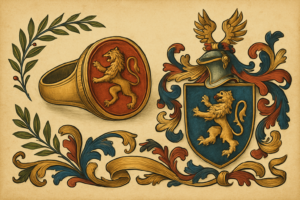
Few objects in human history have carried as much weight — political, personal, and symbolic — as the signet ring. For over three thousand years, from Egyptian pharaohs to medieval knights to modern gentlemen, the signet ring has been the ultimate mark of personal identity and authority.
If you’ve ever wondered why signet rings feel so significant, the answer lies in their remarkable history.
Ancient Origins: Egypt and Rome
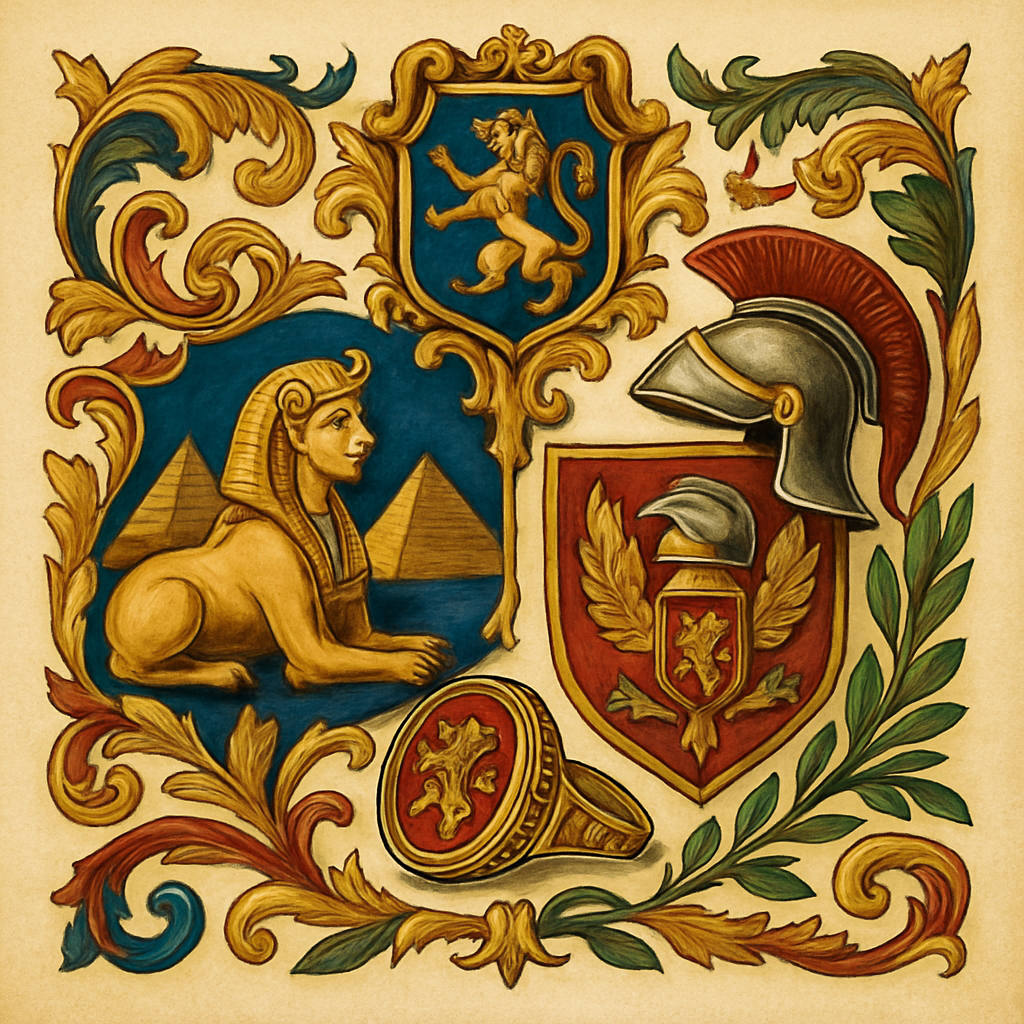
The earliest signet rings date to ancient Egypt, around 3500 BCE. Pharaohs and high officials wore rings engraved with hieroglyphic cartouches — their royal names in an oval frame. These rings were pressed into soft clay or wax to seal documents and mark ownership. The ring of a pharaoh was so powerful that a bearer of the pharaoh’s ring could command armies and open treasuries in the ruler’s name.
The practice spread throughout the ancient world. In ancient Greece, signet rings were used to seal letters and authenticate documents. Alexander the Great famously used his signet ring to seal decrees across his vast empire.
In ancient Rome, the signet ring became a symbol of social status. Roman law specified who could wear gold rings (originally only senators), silver (equestrians), and iron (common citizens). A Roman’s ring was his legal identity — pressing it into wax was equivalent to signing your name.
The Latin word for ring, anulus, became synonymous with authority itself. When a Roman emperor died, the first act of succession was often the transfer (or destruction) of his signet ring.
The Medieval Period: Heraldry Meets the Ring
The medieval period transformed the signet ring from a seal of personal identity into a bearer of family identity. As heraldry developed in the 12th and 13th centuries, knights and nobles began engraving their coats of arms onto their signet rings.
The signet ring became the portable version of the family coat of arms — used to seal letters, authenticate legal documents, and mark personal possessions. When a medieval lord pressed his ring into hot wax, the resulting seal carried all the legal and social weight of his family name and rank.
Losing your signet ring was a serious matter. Finding someone else’s ring could give you dangerous power to forge documents in their name. This is why signet rings were traditionally destroyed or buried with their owner at death — to prevent misuse.
The Renaissance and Early Modern Period
During the Renaissance (14th–17th centuries), signet rings became increasingly artistic. Italian goldsmiths crafted rings of extraordinary beauty — intaglio-carved gemstones (carnelian, agate, onyx) set in elaborate gold mounts. The Medici family, the Borgias, and European royalty all wore signet rings as much for their aesthetic beauty as for their practical sealing function.
The invention of the printing press and standardized paper didn’t diminish the signet ring’s importance — if anything, as literacy spread and more documents were exchanged, the seal became more, not less, important as a mark of authenticity.
The 18th and 19th Centuries: A Mark of Standing
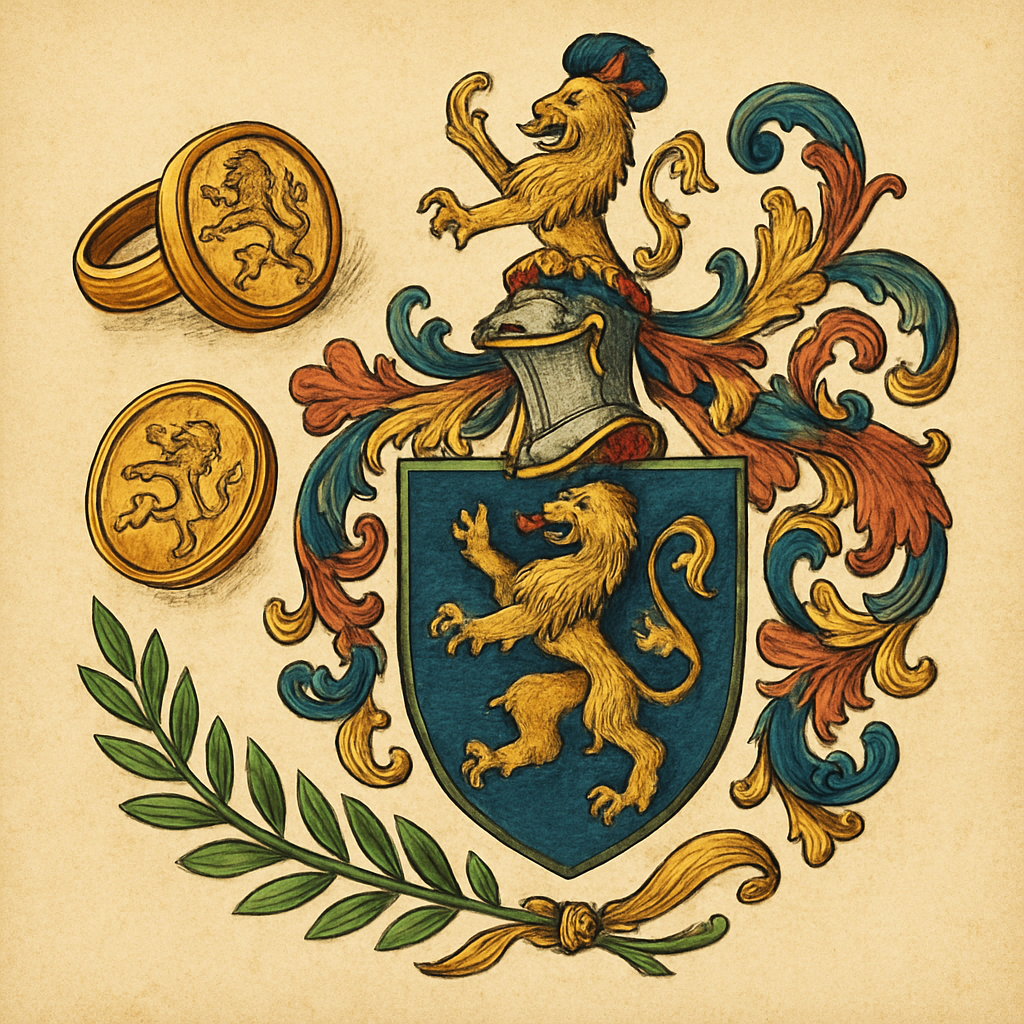
By the Georgian and Victorian eras, the signet ring had become one of the few personal emblems considered appropriate for gentlemen to wear. A man of standing had a signet ring — period. It was engraved with his family arms, his initials, or both.
Victorian signet rings were particularly elaborate — gold bezels with shields, helmets, and crests engraved in microscopic detail. Many were family heirlooms passed from generation to generation.
The tradition of marking a coming-of-age moment with a signet ring — at graduation, at the start of a career, or as an inheritance — became firmly established in this period.
The 20th Century and the Modern Revival
The use of wax seals declined through the 20th century as other forms of authentication (signatures, stamps, digital verification) took over. But the signet ring never disappeared as a cultural symbol — it transformed from a functional object into a statement of heritage and identity.
Today, interest in signet rings and the heraldry they carried is experiencing a major revival. A new generation values meaningful symbols of family history over generic ones — emblems that tell a story, that carry real history, that connect a person to something larger than themselves.
At the heart of that revival is the same thing that mattered to medieval knights and Renaissance nobles: the family coat of arms itself — the design that gave every historic seal its meaning.
What a Signet Ring Symbolized
Across three thousand years, the signet ring stood for several things:
- Heritage: Connection to family history and the generations that came before
- Identity: An emblem that was uniquely yours, not generic
- Permanence: A mark meant to last across a lifetime and beyond
- Story: Every coat of arms behind a seal has a history worth sharing
Discover the Coat of Arms Behind Your Family’s Seal
The seal pressed into wax for centuries was only ever as meaningful as the coat of arms it carried. We research your surname across historical archives to find the coat of arms historically associated with your family name — and explain what every symbol and colour in it means.
- Search your family name — find your coat of arms
- Your personalized Family Legacy Report — a digital PDF with your coat of arms, surname origin and history, and symbol meanings, delivered instantly by email